What Are the Signs of a Hidden Water Leak?
The main signs are unexplained dampness, musty odors, surface damage, mold, plumbing sounds, pressure changes, and higher water use. A single sign may have another cause, but several signs together deserve attention.
These signs can point to a wall leak, ceiling leak, under-floor leak, or supply line leak. Our Water Leak Detection service helps identify the likely source before damage spreads.
Why Is the Water Bill Higher When Water Use Hasn't Changed?
A higher water bill without changed use can indicate continuous water flow from a hidden leak or another fixture problem. A toilet leak can waste water quietly, while a supply line or hidden pipe leak may run behind a wall or beneath flooring.
The water meter can help show whether water is moving when every faucet is closed. Turn off normal water use and watch for movement without opening walls or changing plumbing. We can then check the plumbing system and separate a fixture problem from concealed water loss.
How Do Musty Smells and Damp Spots Point to a Leak?
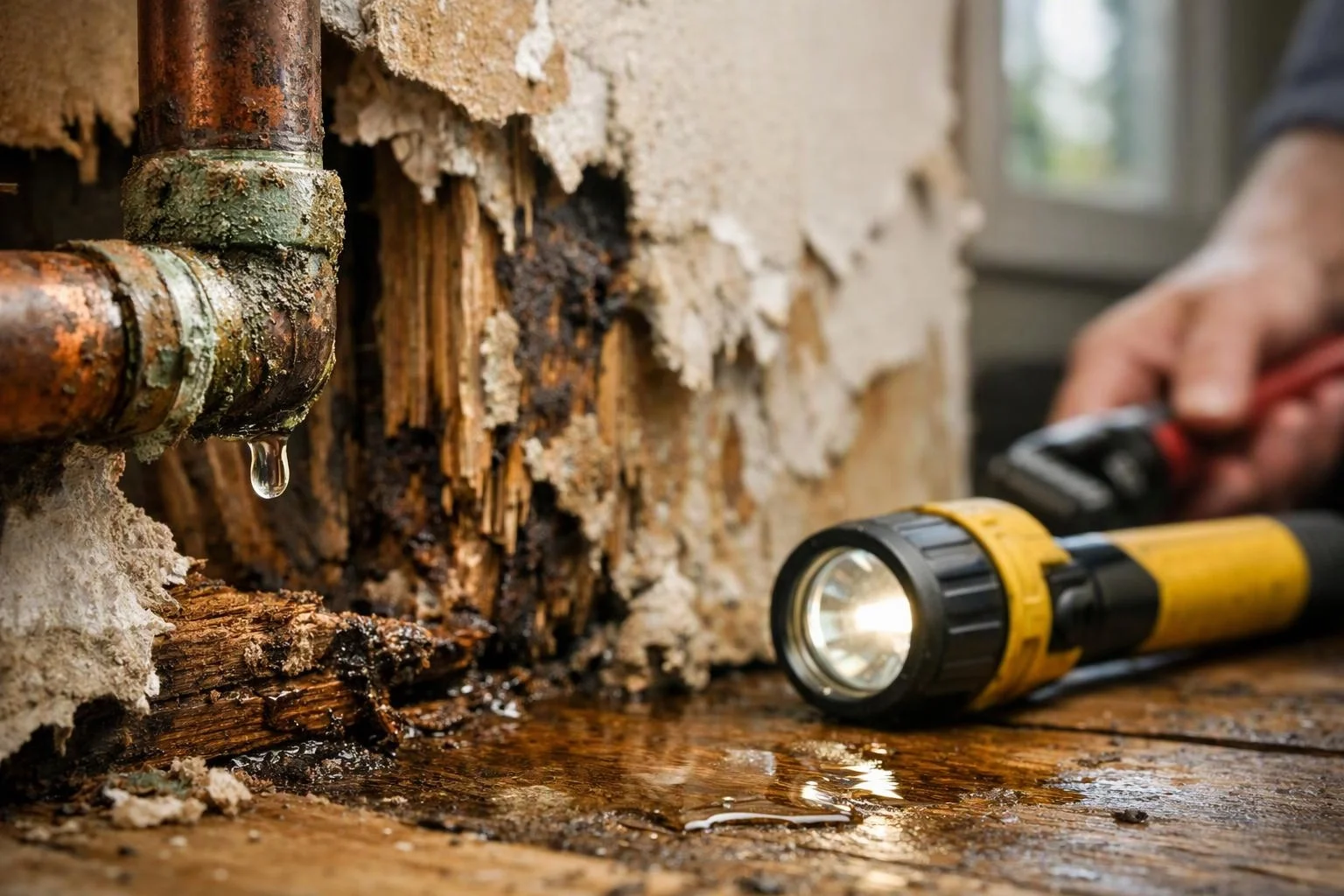
Musty smells and recurring damp spots can show that moisture is collecting behind walls, under floors, or above ceilings. Moisture trapped near drywall, cabinets, flooring, or a ceiling can remain hidden while materials slowly change.
A damp wall may feel cool or soft, but the wet area may not sit directly above the leak. Mold growth can also appear after repeated moisture exposure. Our team traces the affected area and checks nearby plumbing to locate the leak source.
How Does DIY Checking Compare With Calling Us?
You can check visible signs and water use safely, while we trace hidden water and plan the repair. Homeowner checks work best for accessible fixtures and clear moisture, while concealed leaks need careful testing.
| Factor | What you can do yourself | What we do |
|---|---|---|
| Homeowner inspection | Look at accessible plumbing, fixtures, surfaces, and appliance connections. | Review the affected area and connect visible signs to the plumbing system. |
| Water meter check | Watch for unexplained movement when normal water use has stopped. | Use water-use clues with other tests to assess possible water loss. |
| Visible plumbing | Check for drips, wet connections, stains, and moisture damage. | Check connected pipes and fixtures for signs that support the leak source. |
| Water leak detection | Note where sounds, odors, or damp spots appear. | Trace concealed moisture and narrow down the leak location with noninvasive testing when suitable. |
| Water leak repair | Avoid opening walls or changing plumbing. | Explain repair options after we identify the source and affected plumbing. |
What Can You Check Safely Before Calling Us?
You can inspect accessible fixtures, note damp areas, and watch for unexplained water movement without opening walls or changing plumbing. Look at visible pipes, faucets, toilets, and appliance connections for drips or wet surfaces.
You can also note changes near the water meter and identify the main shutoff valve. Avoid disturbing damaged drywall, flooring, or ceiling materials. If water is actively spreading, use the shutoff valve when you can do so safely and contact our team.
When Should You Contact Us About a Hidden Water Leak?
Contact us when dampness persists, water damage spreads, or the source cannot be safely identified. An active leak can affect drywall, flooring, ceilings, cabinets, and nearby plumbing fixtures.
Mold growth, low water pressure, or repeated meter movement also deserves attention. Our team can perform water leak detection and explain the next step for water leak repair.
Contact our team when the leak source remains unclear or the affected area continues to change.
What Does Our Hidden Water Leak Process Cover?
Our process identifies the likely leak source, checks affected plumbing, explains repair options, and prepares a quote based on the work required. We match the inspection method to the location and the signs present.
Our Water Leak Repair work addresses the plumbing problem after the source is confirmed. We explain what the work involves before repair begins.
What Can Make Hidden Water Leak Repair More Involved?
The leak location, pipe condition, access needed, and related water damage can change the repair scope and quote. A leak near an accessible connection may need less preparation than a leak behind finished surfaces.
Pipe material can affect the repair method, while drywall, flooring, or ceiling damage can add restoration work. Our team explains these factors after tracing the leak and reviewing the affected plumbing.
Questions About Hidden Water Leaks
Can a hidden water leak cause mold?
Yes, a hidden water leak can cause mold when moisture remains trapped near building materials. Recurring mold growth can point to an unresolved moisture source.
Can a water leak be hidden behind a wall?
Yes, a water leak can be hidden behind a wall when a pipe connection or supply line releases water inside the wall space. Damp drywall, peeling paint, odors, and sounds can provide clues.
Why do I hear water running when every faucet is off?
Water running sounds with every faucet off can point to a toilet leak, continuous flow, or a concealed pipe leak. Check accessible fixtures and the water meter, then contact us if the sound continues.
Can low water pressure indicate a hidden leak?
Yes, low water pressure can indicate a hidden leak, but it can also have other plumbing causes. Our team checks the pressure change with other signs before identifying the likely source.