Signs a Sewer Problem May Be in the Main Line
Signs of a main sewer line problem include repeated backups, several slow drains, toilet or tub gurgling, sewer odors, and soggy ground. PlumbingMaplevalley.info explains what these signs mean and how we confirm the problem safely.
Request an EstimateWhat Are the Main Signs of a Sewer Line Problem?
A main sewer line problem usually affects more than one plumbing fixture. The main signs are repeated backups, multiple slow drains, gurgling fixtures, sewer smells, and unusually wet ground.
These symptoms can point to a sewer line clog, pipe damage, or root intrusion. Our team looks at the full pattern before choosing cleaning or repair work.
Why Do Toilets and Bathtubs Gurgle Together?
A toilet and bathtub can gurgle together when trapped air moves through a restricted main sewer line.
Water movement through a drainpipe changes air pressure when a main sewer line clog limits flow. The sound may happen when you flush the toilet, run the bathtub, or use another nearby fixture.
A single noisy fixture may have a local drain issue. Gurgling across fixtures points more strongly to a shared blockage.
How Can You Tell a Main Sewer Clog From a Local Drain Clog?
A main sewer clog usually affects several fixtures, while a local drain clog usually affects one fixture.
A branch drain serves part of the plumbing system. The main sewer line carries wastewater from several branch drains toward the public sewer or private wastewater system.
A drain backup that reaches multiple rooms deserves prompt attention. Our team checks the affected fixtures and the accessible cleanout to locate the problem safely.
What Does a Sewer Smell in the House or Yard Mean?
A sewer smell can point to escaping sewer gas, a damaged pipe, a blocked line, or a dry drain trap.
A drain trap holds water that normally blocks sewer gas from entering the home. If the trap is dry, the odor may come from that fixture rather than the main sewer line.
An odor near the yard can suggest a sewer line leak or a damaged sewer pipe. We check the surrounding fixtures and line conditions before recommending work.
What Can Cause a Soggy Patch Over the Sewer Line?
A soggy patch can indicate a leaking or damaged sewer line, especially when it appears without unusual rain or irrigation.
A broken sewer pipe can release wastewater into nearby soil. A pipe belly can also hold water and slow flow, which may create repeated drainage problems.
Our team checks whether the wet area matches the sewer route and the reported indoor symptoms. Repair options may include trenchless sewer repair or sewer excavation, depending on the pipe and surrounding property.
How We Confirm a Main Sewer Line Problem
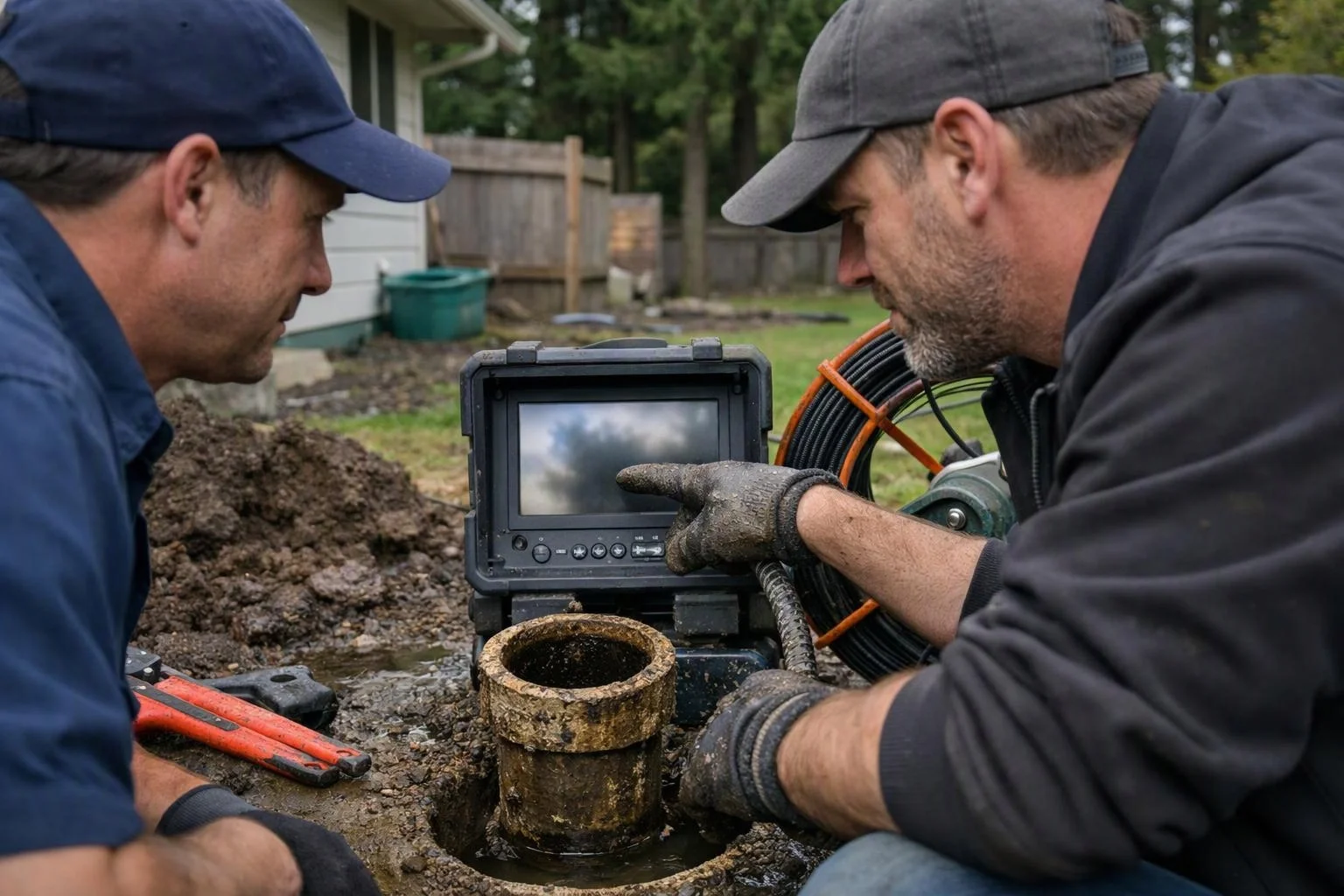
We confirm the cause by reviewing the symptoms, accessing the sewer line, cleaning the blockage when appropriate, and using a camera inspection to view the pipe.
Our process separates a simple blockage from root intrusion, cracks, a pipe belly, or a collapsed sewer line.
For more detail about blockage removal, see our guide to Sewer Line Cleaning. The inspection findings help us choose a focused solution.
DIY Checks Versus Calling PlumbingMaplevalley.info
You can note which fixtures are affected and avoid adding water, while we inspect, clean, and repair the main sewer line safely.
Simple observations help us understand the pattern. Work on a blocked or damaged main sewer line should be handled by our team because wastewater exposure and buried pipe conditions create safety concerns.
| Factor | What you can do yourself | What we do |
|---|---|---|
| Affected fixtures | Note which drains, toilets, or tubs are slow or backing up. | We use the pattern to assess the main sewer line. |
| Drain use | Limit water use when wastewater may back up. | We protect the work area and manage the blockage safely. |
| Inspection | Look for visible odors, wet ground, or fixture changes. | We perform sewer line cleaning and sewer camera inspection. |
| Repair decision | Avoid digging or using harsh chemical drain cleaners. | We explain sewer line repair or replacement options from the findings. |
What Should You Do When Several Sewer Warning Signs Appear?
Stop using fixtures that may add water and contact us when several warning signs point to the main sewer line.
Keep people and pets away from wastewater and soggy areas. Don't use chemical drain cleaner for a suspected main sewer clog because it may remain in the line and create a hazard during service.
We can assess the blockage, perform sewer line cleaning when suitable, and explain the next step from the inspection results.
Questions About Main Sewer Line Warning Signs
Can a main sewer line clog cause several drains to back up?
Yes, a main sewer line clog can cause several drains to back up because those fixtures share the main drainage path.
Is a sewer smell always caused by a main sewer line problem?
No, a sewer smell isn't always caused by a main sewer line problem because a dry drain trap can also release sewer gas.
Can tree roots cause a main sewer line blockage?
Yes, tree roots can enter joints or cracks and create a main sewer line blockage.
Should I use chemical drain cleaner for a suspected main sewer clog?
No, you shouldn't use chemical drain cleaner for a suspected main sewer clog because the product can remain in wastewater and create a hazard during inspection or cleaning.
If several warning signs appear together, contact us for an inspection and clear next steps.
Contact our team to discuss the sewer line symptoms and request a quote based on the work required.