When a Slow or Clogged Drain Needs Professional Attention
A clogged drain needs PlumbingMaplevalley.info when it keeps returning, affects multiple fixtures, causes foul odors or gurgling, or leaves standing water. We inspect the blockage, identify its cause, and explain the drain cleaning work needed.
Request an Estimate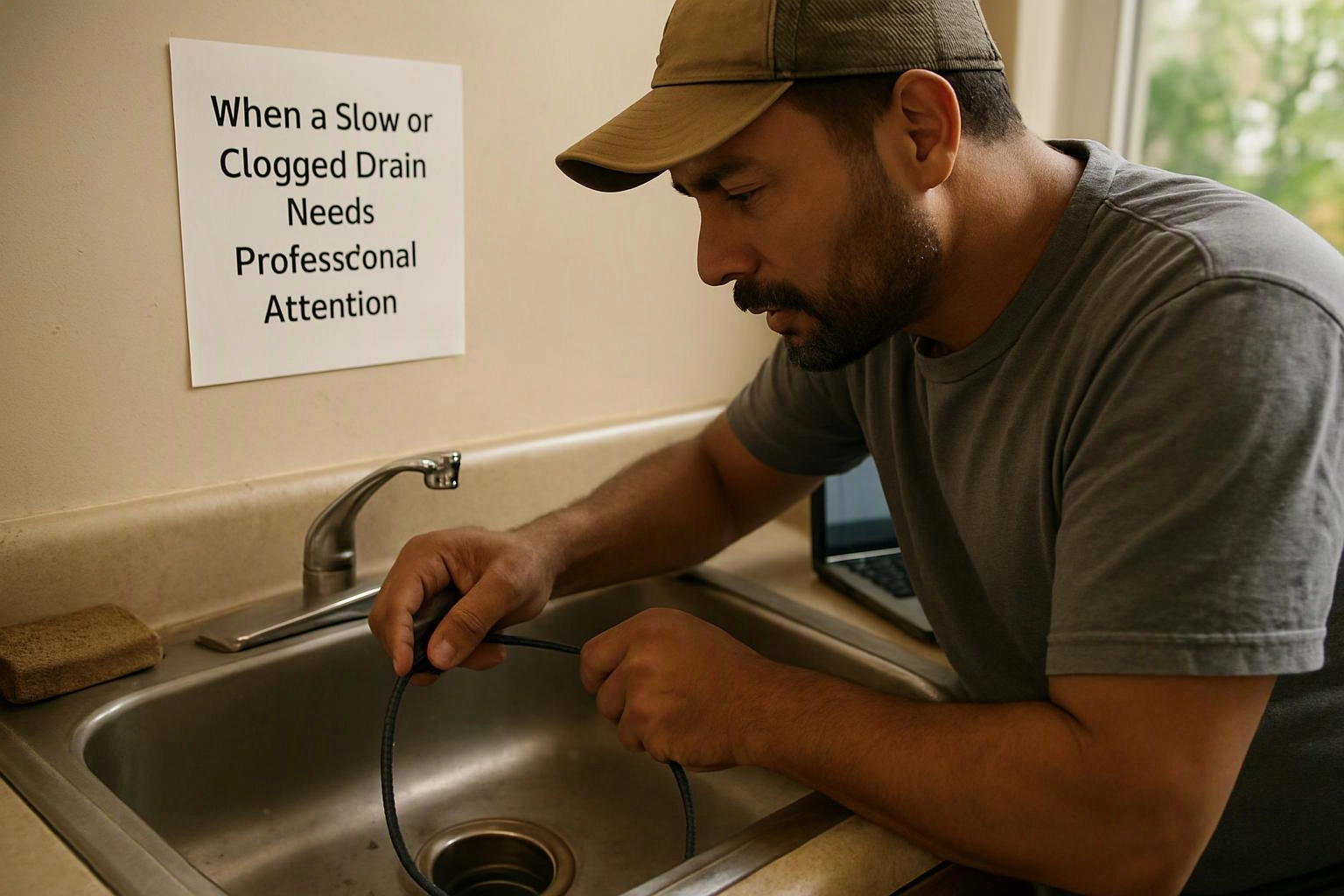
What Makes a Slow Drain a Plumbing Problem?
A slow drain becomes a plumbing problem when poor flow keeps returning or affects more than one fixture.
A slow drain can come from buildup near the drain opening. It can also point to a deeper drain blockage in the plumbing system. When water drains poorly after basic care, we check the cause instead of treating only the visible symptom.
Warning Signs Your Clogged Drain Needs a Plumber
A clogged drain needs our attention when warning signs show that water cannot move freely through the waste line.
These signs can appear together, especially when a blockage is growing. We inspect the affected fixtures and nearby drain lines to locate the source.
Why Does a Drain Keep Clogging?
A drain keeps clogging when buildup, an object, roots, or pipe damage continues restricting water flow.
Common causes include grease buildup, hair, soap residue, and a foreign object. These materials can collect inside the drain pipe and reduce the opening for water.
Tree roots can enter buried lines and create a persistent drain blockage. A damaged drain pipe can also shift, crack, or collapse enough to cause repeated poor drainage.
What Does a Slow Drain With a Bad Smell Mean?
A slow drain with a bad smell often points to trapped waste or a developing blockage that needs inspection.
Organic buildup can sit inside the drain trap or drain pipe and produce an unpleasant odor. A dry or faulty drain trap can also allow sewer gas to enter the room.
We check the trap, the visible drain opening, and the connected line. That inspection helps separate a simple buildup issue from a larger wastewater problem.
What Do Gurgling Drains and Standing Water Mean?
A gurgling drain with standing water signals restricted flow and can precede a wastewater backup.
A blockage can trap air behind slow-moving water. That trapped air may create bubbling or a gurgling sound as nearby fixtures drain.
Standing water means the drain cannot carry water away normally. Stop using connected fixtures if wastewater is rising, and contact us for a drain inspection.
DIY Drain Care vs Calling Us
Simple drain care can help with light surface buildup, but recurring blockage needs a closer look.
You can use a plunger carefully and keep a drain screen in place. We handle blockage removal when the clog returns, affects multiple fixtures, or sits beyond the trap.
| Factor | What you can do yourself | What we do |
|---|---|---|
| Light surface buildup | Remove visible debris and use a plunger with care. | Check whether buildup extends beyond the fixture trap. |
| Drain screen care | Keep hair and food waste out with a drain screen. | Explain routine care after clearing the blockage. |
| Recurring blockage | Avoid repeated force or harsh chemical products. | Perform a drain inspection and locate the cause. |
| Blocked shared line | Limit water use until the issue is assessed. | Trace the line and complete the needed blockage removal. |
How We Check and Clean a Clogged Drain
We check the affected fixture, trace the blockage, clear the drain, and confirm that water flows correctly.
Our team begins with a drain inspection and checks the likely blockage location. We consider the fixture, connected lines, pipe condition, and signs of wastewater backup.
We then choose a suitable drain cleaning method for the blockage. After blockage removal, we perform a flow test to confirm that water moves through the drain pipe as expected.
What Changes the Cost of Drain Cleaning?
Drain cleaning cost changes with the blockage location, severity, access, pipe condition, and cleaning method.
A blockage near an accessible fixture may need different work from a deep blockage in a buried waste line. Pipe damage, tree roots, and limited pipe access can also change the work required.
We explain the drain cleaning method and the work included after assessing the drain. Contact us for a quote based on the actual blockage and pipe condition.
How to Prevent Another Drain Clog
Routine drain care reduces the materials that enter household waste lines.
Use these habits to help protect your drains:
When Should You Contact PlumbingMaplevalley.info?
Contact PlumbingMaplevalley.info when a drain keeps clogging, backs up, smells foul, or shows restricted flow across fixtures.
Our team can inspect a recurring drain clog, standing water, or multiple fixture blockage. We identify the likely cause and explain the drain cleaning work needed.
For more information about our approach, visit our Drain Cleaning service page.
Questions About Slow and Clogged Drains
Should I use chemical drain cleaner for a recurring clog?
No, chemical drain cleaner isn't the right answer for a recurring clog because it may not remove the underlying cause. We inspect the drain and choose a cleaning method that matches the blockage and pipe condition.