Which type of garbage disposal should I install?
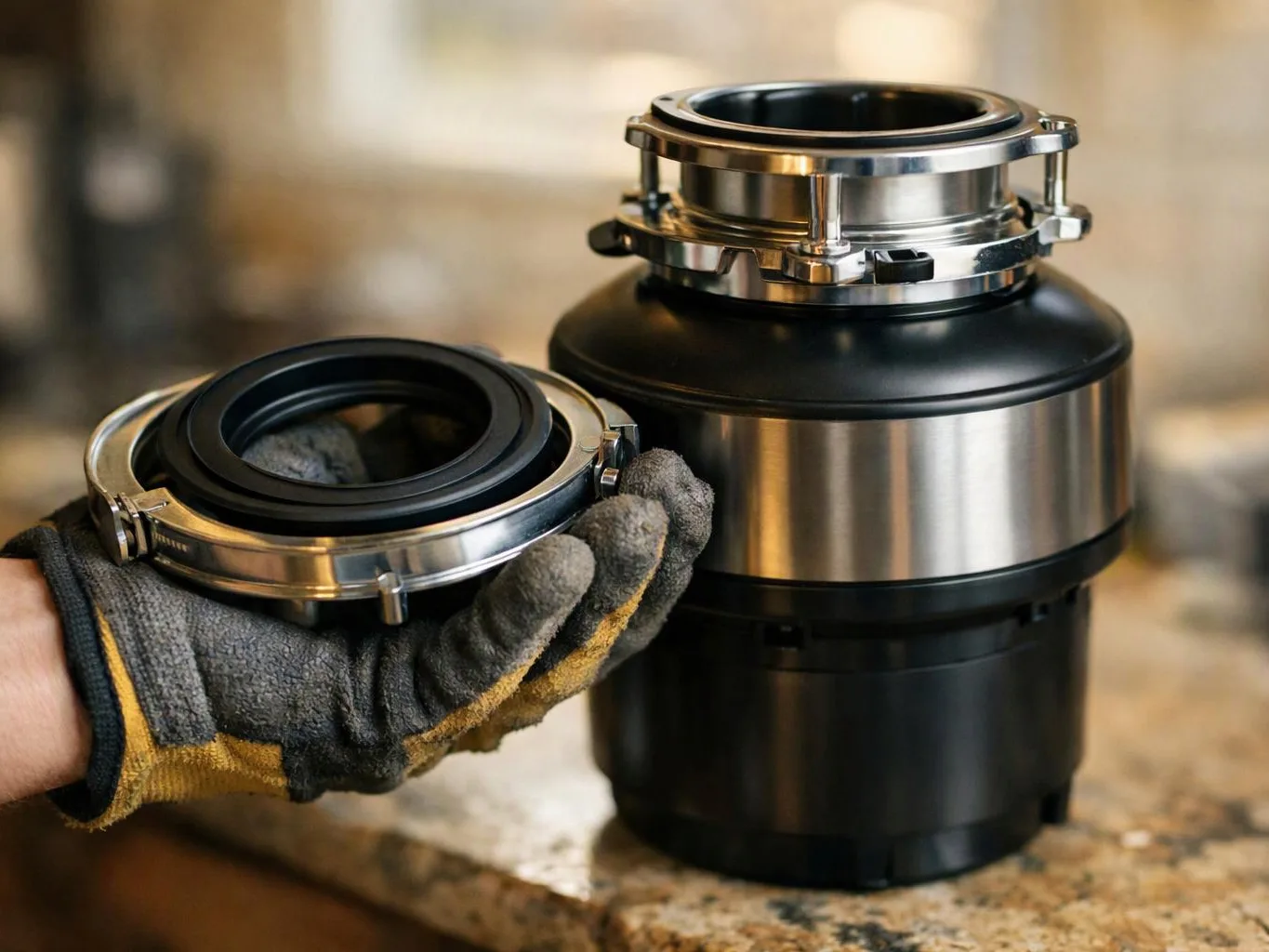
Continuous feed is the practical choice for many kitchens with regular meal prep and a suitable wall switch. Batch feed suits customers who want the unit covered before operation. Motor power, sink fit, grinding parts, cabinet space, and septic compatibility also affect the choice. We review those points before recommending a unit and setting the installation scope.
How do I know if my sink can accept a disposal?
A compatible sink opening and mounting surface are needed for a secure disposal fit. The flange, sink thickness, cabinet clearance, drain outlet, and power access all matter. Some sinks need a different flange or related plumbing work. Our plumber checks these points before the estimate, so you know whether installation alone fits the property.
What should I check before requesting an installation quote?
The existing sink, drain, power access, and cabinet space are the key items to check first. Note any leaks, slow draining, humming, or damaged switches. Photos of the sink underside and disposal area can help explain access. A plumber still needs to inspect the connections before confirming the work scope.
When does a disposal problem need drain repair too?
A disposal problem needs drain repair when water backs up, the P-trap leaks, or the branch line stays blocked after the unit stops. A replacement unit cannot clear damaged or obstructed piping. We inspect the discharge path and nearby joints, then separate drain work from the installation estimate. That keeps the planned work clear.
Why does a disposal leak below the sink?
A disposal can leak from the sink flange, discharge tube, drain joint, or worn seal. Loose mounting, corrosion, poor alignment, and a damaged P-trap are common points to check. Turn off power and avoid using the unit until the source is known. A plumber can isolate the leak and explain whether repair or replacement fits.
What changes the installation price on this job?
The disposal model, sink flange condition, drain alignment, electrical access, and related repairs change the installation price. Cabinet access also matters when connections are tight or damaged. We review those conditions and provide an upfront estimate before work begins. The estimate covers the planned scope, not an unlisted plumbing repair discovered later.
Can a disposal connect to a septic system?
A disposal can connect to some septic systems when the property setup and product guidance support it. Septic compatibility needs review before the unit is chosen. Food waste adds material to the system, so household use and maintenance matter. We can assess the kitchen connection and explain when a different waste-handling choice is more suitable.