Trenchless Sewer Repair vs. Excavation: Comparing Your Options
Trenchless sewer repair usually limits digging and surface disruption, while excavation exposes the line for direct repair or replacement. PlumbingMaplevalley.info compares pipe condition, access, site constraints, and quote details to help Maple Valley homeowners choose. We focus on repair feasibility, property access, site grade, and the work each method can safely complete.
Request an EstimateOptions at a Glance
Trenchless work suits lines with a usable route and workable entry points. Excavation suits lines that need direct exposure, correction, or replacement.
- Trenchless sewer repair fits repairable damage where limited digging matters.
- Sewer excavation fits collapsed, severely damaged, or poorly graded lines.
How Trenchless Sewer Repair and Excavation Differ
Trenchless sewer repair accesses the line through limited entry points, while excavation exposes the pipe by opening the ground above it.
Trenchless methods can reduce property disruption when the existing sewer line has a suitable path. Sewer excavation creates direct access for sewer line repair, connection work, pipe replacement, or grade correction.
We check the pipe route, surface conditions, buried utilities, and property access before choosing a method. Steep or low-lying properties in Maple Valley can add sewer-flow and excavation challenges, so site grade matters.
Trenchless Sewer Repair can be a strong option when the damage and access conditions support it.
Trenchless Repair vs. Excavation at a Glance
Both methods can address sewer line problems, but they place different demands on the property. The table compares the main cost drivers, work conditions, and trade-offs.
| Factor | Trenchless repair | Sewer excavation |
|---|---|---|
| Cost drivers | Entry points, lining or bursting method, pipe condition, and restoration needs. | Pipe depth, trench access, soil, utilities, replacement scope, and surface restoration. |
| Project timeline | Often involves less surface work when the route is suitable. | Includes opening, repairing or replacing, testing, backfilling, and restoration. |
| Maintenance | The repaired line still needs normal sewer care and attention to new blockages. | New work still needs proper use, cleaning, and inspection when drainage problems return. |
| Best-for conditions | Repairable cracks, root intrusion, corrosion, or leaks with accessible entry points. | Collapsed sewer pipe, severe structural damage, bad grade, or an inaccessible trenchless route. |
Neither option fits every damaged pipe. A sewer camera inspection helps connect the repair method to the actual pipe condition.
When Trenchless Sewer Repair Is an Option
Trenchless sewer repair is an option when the existing line has a suitable path, accessible entry points, and damage the selected method can address.
We use a sewer camera inspection to check cracks, root intrusion, pipe corrosion, joints, blockages, and the line’s shape. We also check whether equipment can reach the access points without creating unsafe site conditions.
Trenchless work may not fit a crushed line, a badly offset connection, or a route with severe grade problems. A camera view alone isn’t enough when access, soil, or buried utilities create added limits.
Pipe Lining and Pipe Bursting Solve Different Problems
Pipe lining places a new liner inside the existing sewer line, while pipe bursting breaks the old line and pulls a new pipe through the route.
Pipe lining needs an existing path that can accept the liner. Pipe bursting needs suitable access and enough room for the new pipe to follow the route.
We compare the existing sewer line, connection points, pipe size, and structural damage before recommending either method. Neither method automatically fixes every lateral connection or grade problem.
Advantages of Trenchless Sewer Repair
Trenchless repair can reduce the amount of ground opened when the line and property support the method. That can limit disruption to hardscape, planting areas, and other surface features.
Surface restoration still depends on the access points, equipment path, and property conditions. We include those needs in the repair scope.
Best for Trenchless Sewer Repair
Trenchless sewer repair is best for a suitable pipe path, accessible entry points, and repairable sewer damage.
We may recommend it for cracks, root intrusion, or corrosion when the line remains workable. We don’t recommend forcing a trenchless method onto a route that needs direct correction.
When Sewer Excavation Is the Better Option
Sewer excavation is the better option when the line needs direct exposure, replacement, correction, or work that trenchless methods cannot safely complete.
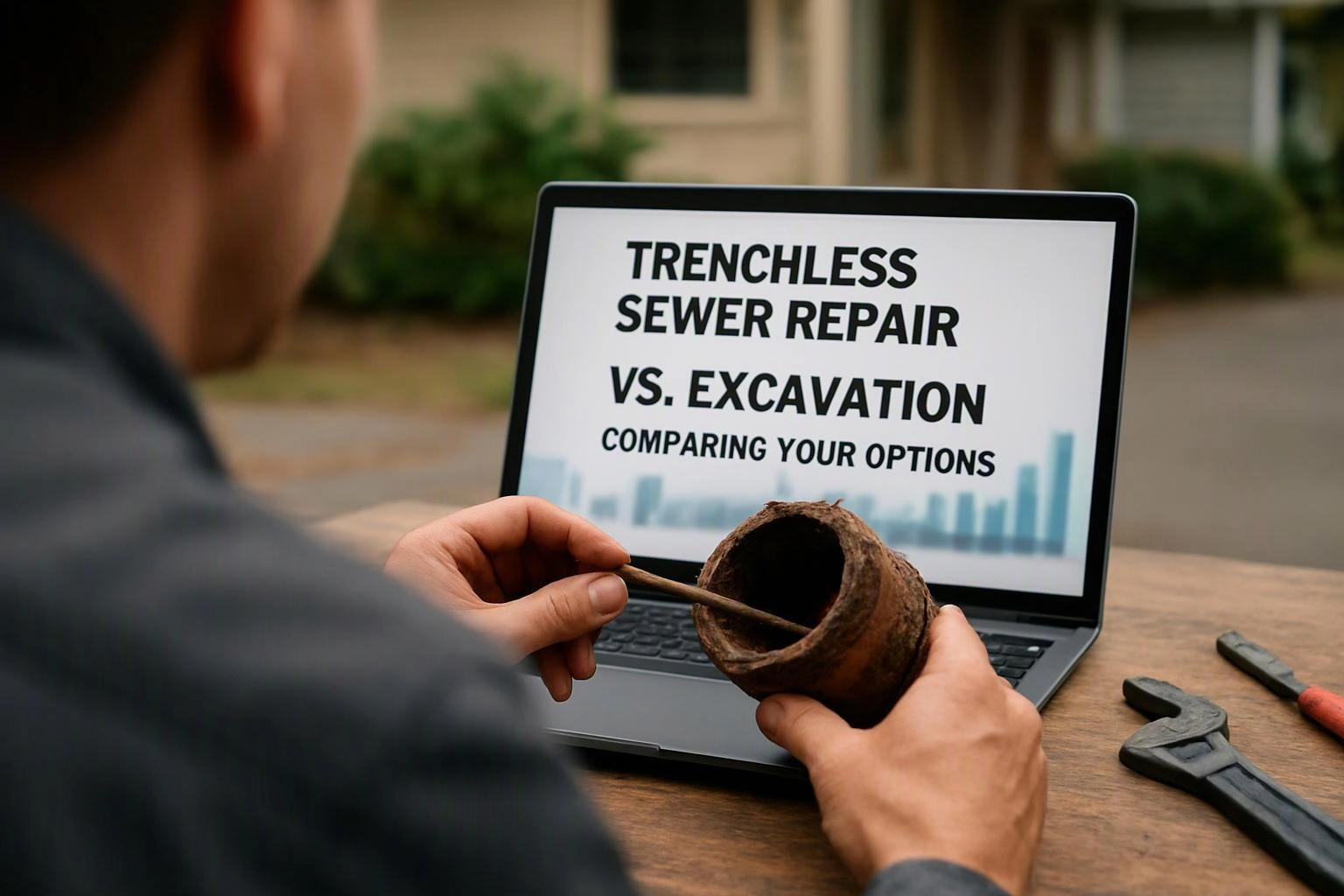
A collapsed pipe may need open access so we can remove damaged material and install a properly supported replacement. Severe pipe damage, incorrect pipe grade, or a failed connection can also require excavation.
Buried utilities, deep pipe placement, steep ground, low-lying ground, and limited property access can change the work plan. We review these conditions before excavation begins.
Advantages of Sewer Excavation
Sewer excavation provides direct access to the pipe and surrounding soil. That visibility helps us correct problems that cannot be solved through a small entry point.
Excavation requires a restoration plan for soil, paving, planting areas, and other affected surfaces. We explain those needs in the quote.
Best for Sewer Excavation
Sewer excavation is best for a collapsed pipe, severe structural damage, incorrect pipe grade, or an inaccessible trenchless route.
We also consider excavation when the line has a connection problem that lining or bursting cannot correct. Property access and buried utilities help determine where and how the trench can be opened.
What Changes the Cost and Work Required
Sewer repair cost depends on the damage, pipe access, repair method, site conditions, restoration needs, and the work shown in the quote.
A sewer camera inspection helps define the damage type and repair scope. Pipe depth, pipe length, access points, soil conditions, surface materials, and utility conflicts can add work.
Steep or low-lying properties may create localized sewer-flow and excavation challenges. We account for site grade, equipment access, safety needs, and surface restoration when preparing the quote.
Request an exact quote from our team through our contact page. We explain what the recommended method includes before work begins.
What Our Sewer Repair Quote Should Include
A sewer repair quote should connect the diagnosis to a clear repair scope. Our quote should make the work, access needs, and restoration responsibilities easy to review.
How We Choose Between Trenchless Repair and Excavation
We choose the repair method after checking the pipe condition, access, property layout, and limits of each available method.
Our team starts with a sewer camera inspection when access allows. We then compare repair feasibility, pipe grade, buried utilities, surface conditions, and the need for direct access.
We also explain whether the work involves a sewer blockage, structural damage, a connection issue, or full pipe replacement. The selected method must solve the cause, not only the visible symptom.
Which Sewer Repair Option Fits Your Maple Valley Property?
Trenchless repair fits suitable lines where limiting surface disruption matters, while excavation fits lines needing direct access or replacement.
Choose trenchless work when the pipe path, entry points, and damage support lining or bursting. Choose excavation when a collapsed sewer pipe, severe damage, incorrect grade, or connection problem requires open access.
Our team will explain the repair scope, site limits, and surface restoration needs before you approve the work. A clear quote helps you compare the method with the condition of your property.
How to Choose a Sewer Repair Method
A sound choice depends on documented pipe findings and a complete description of the work. Check these points before approving the repair.