Water Softener vs. Water Filter: Choosing a System for Your Home
A water softener treats hard water minerals, while a water filter targets specific contaminants or improves taste. PlumbingMaplevalley.info can help match the system and installation approach to your water concerns. The right choice depends on water testing, household use, plumbing access, and ongoing maintenance needs.
Request an EstimateOptions at a Glance
Water softeners and water filters solve different water quality problems. The best fit depends on what you want to remove or reduce.
Water Softener vs. Water Filter at a Glance
The better system depends on whether hard water or a specific contaminant causes the household concern. Installation cost drivers include equipment choice, plumbing access, connection needs, and future maintenance.
| Option / System | Best For | Installation and Maintenance | Key Trade-Offs |
|---|---|---|---|
| Water softener | Hard water, calcium, magnesium, and scale buildup | Cost changes with capacity, drain access, plumbing, and ongoing salt or media needs. | Treats hardness but doesn't target every contaminant. |
| Water filter | Sediment, chlorine, taste, odor, iron, or another selected contaminant | Cost changes with filter type, flow rate, access, connections, and replacement filters. | Needs media that matches the contaminant and rated purpose. |
| Combined system | Hardness plus separate taste, odor, sediment, or contaminant concerns | Cost and maintenance are higher in scope because both treatment functions must be planned. | Needs careful equipment order, space planning, and service access. |
What’s the Difference Between a Water Softener and a Water Filter?
A water softener reduces hardness minerals, while a water filter removes or reduces selected impurities. Hard water contains calcium and magnesium that can leave scale on fixtures and plumbing.
A water filter uses specific media for specific water contaminants. Water quality testing helps show whether the concern involves sediment, chlorine, iron, taste, odor, or another impurity.
What a Water Softener Does for Your Home
A water softener is a treatment system that reduces calcium and magnesium that cause hard water. A salt-based water softener commonly uses a resin tank and brine tank to support the treatment cycle.
A salt-free water conditioner works differently and may help control scale without removing hardness minerals. We review water hardness, plumbing access, household use, and available drain connections before recommending equipment.
Why Homeowners Choose a Water Softener
Homeowners choose a softener when hard water affects cleaning, fixtures, or water-using equipment. The main benefits relate to mineral control across the home.
Best for: a home where hard water symptoms are the main concern.
What a Whole-House Water Filter Removes
A whole-house water filter removes or reduces contaminants that match the filter media and its rated purpose. A sediment filter can capture suspended particles, while a carbon filter can target chlorine and related taste and odor concerns.
Iron and other water contaminants need contaminant-specific filtration. A point-of-entry system treats water as it enters the home, while a point-of-use filter treats water at one fixture. Our Water Filter Supplier service can help match filter media to the treatment goal.
Why Homeowners Choose a Water Filter
Homeowners choose a water filter when a specific water quality concern affects drinking water or household use. The correct filter depends on testing and the media’s rated purpose.
Best for: a home with a known contaminant, sediment concern, taste issue, or odor problem.
Which System Fits Your Home’s Water Problem?
Choose a softener for hard water symptoms and choose a filter when a specific contaminant, taste, odor, or sediment issue needs treatment. Water quality testing gives the decision a stronger basis than appearance alone.
A water report can help identify concerns with municipal water. Private well water may require broader testing because household conditions and source quality can vary. We also consider household water use, flow rate, plumbing access, and the space available for equipment.
Do You Need Both a Water Softener and a Water Filter?
You may need both when hard water and separate taste, odor, sediment, or contaminant concerns affect the home. Combined water treatment works best when each system has a clear treatment goal.
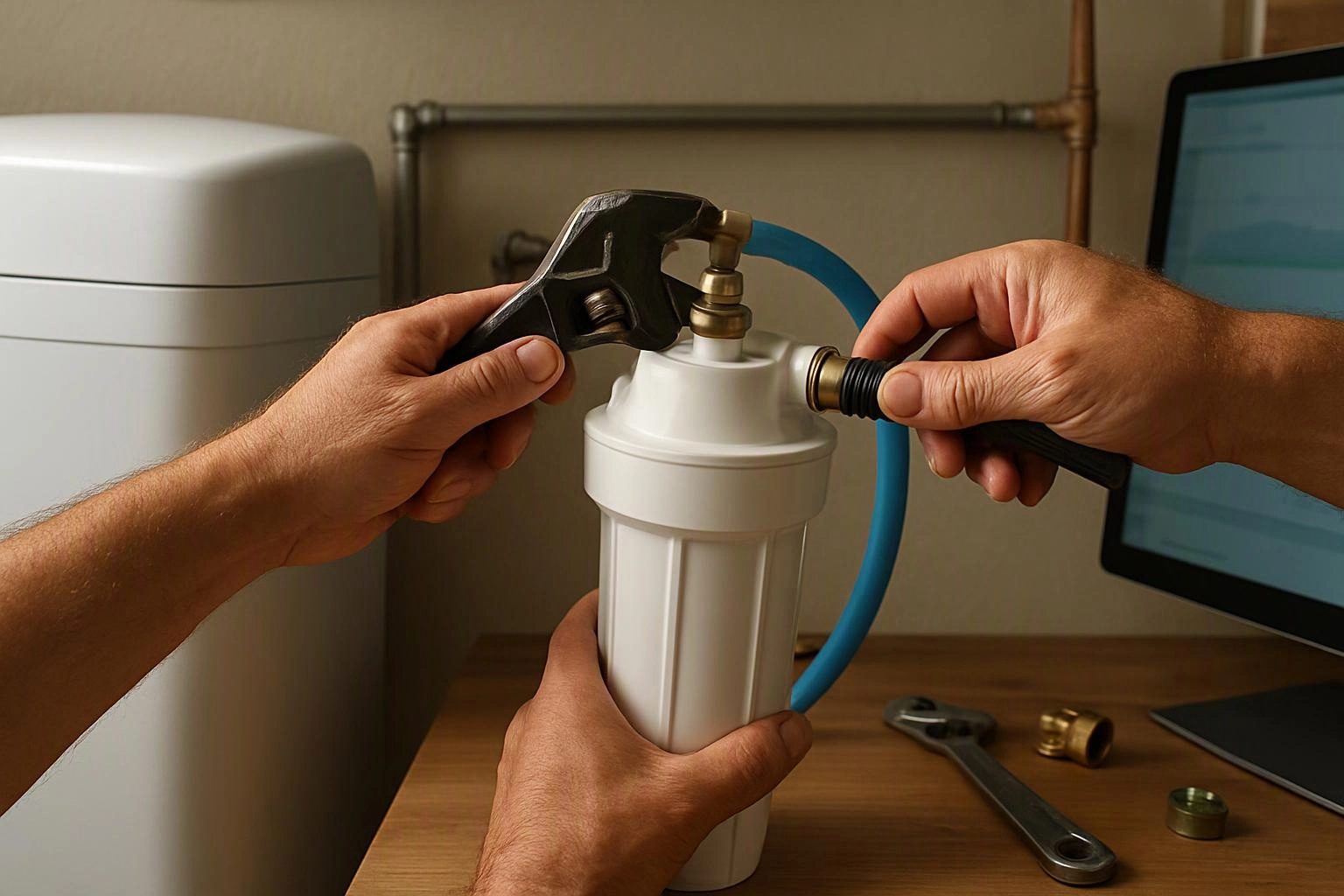
A whole-house system may use sediment filtration before other equipment. Carbon filtration and softening can then be arranged according to water testing, equipment requirements, and household flow needs.
What Changes Water Filter Installation Cost?
Water filtration system installation cost depends on the filter type, system capacity, plumbing changes, access, and future filter needs. A larger system or higher flow rate can change equipment and connection requirements.
We review the installation location, plumbing access, bypass valve, drain connection, and replacement filters. Our quote explains the needed work so you can understand both the installation scope and future maintenance costs.
What Changes Water Softener Installation Cost?
Water softener installation cost depends on the system design, plumbing layout, drain access, electrical needs, and site preparation. Softener capacity, resin tank size, and brine tank placement also affect the installation plan.
We check the drain line, electrical outlet, bypass valve, and plumbing configuration. A salt-based system and a salt-free conditioner can have different installation requirements, so we price the work after reviewing the site.
What Maintenance Should You Plan For?
Water filter maintenance centers on replacement cartridges or media, while softener maintenance includes salt, regeneration, and system checks. Ongoing maintenance cost depends on the selected equipment and the treatment load.
Filter replacement may involve cartridges or larger filter media. Water softener maintenance can include salt supply, brine tank cleaning, resin media checks, control valve checks, and maintenance parts.
How We Plan the Right Installation
Our team plans each water treatment installation around the water quality concern, equipment needs, and plumbing layout. We explain the reason for each recommendation before work begins.
What to Include in Your Installation Quote
An installation quote should explain the equipment, site work, connections, startup checks, and ongoing maintenance requirements. Clear scope helps you compare the treatment plan itself.
We include the equipment, labor, plumbing modifications, valves, drain connection, and electrical connection when required. The quote should also identify filter media, startup and testing, maintenance requirements, and warranty terms.
Choose the Treatment That Matches Your Water
Our team can review your water concerns and explain whether filtration, softening, or both fit the home. We provide residential plumbing guidance for water filtration system installation and water softener installation.
We can also explain the difference between a Water Filter Supplier and a Water Softening Equipment Supplier. Request a quote that names the treatment target, equipment, plumbing installation, startup checks, and future maintenance needs.
How to Choose the Right Water Treatment System
The right water treatment system should match tested water conditions and the home’s installation requirements. Use these checks before approving the work.
Questions About Choosing a Water Softener or Filter
Can a water filter soften hard water?
A standard water filter doesn't soften hard water because filtration and hardness reduction use different treatment methods. A water softener targets calcium and magnesium that cause hardness.
Does a water softener remove contaminants?
A water softener doesn't replace contaminant-specific filtration. A water filter uses selected media to target concerns such as sediment, chlorine, iron, taste, or odor.
Which water softener type is best for a home?
The best water softener type depends on water hardness, household use, plumbing access, and maintenance preferences. A salt-based water softener and a salt-free water conditioner use different treatment approaches.
Should a whole-house filter be installed before or after a water softener?
The correct equipment order depends on the water conditions, filter media, softener design, and manufacturer requirements. We review the treatment goals and plumbing layout before setting the system order.
What should I ask about future filter or salt replacement?
Ask which replacement filters, filter media, salt supply, resin media, and maintenance parts the system needs. We explain the maintenance schedule, access points, and ongoing maintenance costs in the installation scope.