What Low Water Pressure Can Reveal About Your Plumbing
Low water pressure can signal a clogged fixture, damaged pipe, failing pressure regulator, or hidden leak. PlumbingMaplevalley.info helps readers connect pressure patterns with likely plumbing problems and choose the right next step.
Request an EstimateWhat Low Water Pressure Can Reveal
Low water pressure can reveal a restricted fixture, supply problem, damaged pipe, failing pressure regulator, or hidden leak.
The pattern matters because a plumbing system can lose flow at one fixture or across the home. A weak faucet aerator points to a local restriction, while whole-house pressure loss may involve the water supply, main water line, or regulator.
Pressure that changes with water use can also show a restricted pipe or failing component. Our team connects those clues before recommending Water Pressure Repair.
Warning Signs That Point to a Plumbing Problem
Weak water flow throughout the house, sudden changes, damp areas, water stains, and unusual pipe sounds can signal a plumbing problem.
Notice whether the issue affects one fixture or several fixtures. Write down when the pressure changes, especially when another faucet, shower, or appliance runs.
Why Is Water Pressure Low Throughout the House?
Whole-house pressure loss usually involves the main supply, shutoff valve, pressure regulator, or restrictions in the plumbing system.
Check whether every faucet and shower has weak flow. A partly closed shutoff valve can limit the water supply, while a failing pressure regulator can affect the whole home.
Municipal water supply changes can also affect pressure. Inside the home, pipe corrosion and mineral buildup can narrow older water lines and reduce flow.
Our team traces the main water line and checks accessible valves before deciding whether water pressure repair or water line repair fits the problem.
Why Is Water Pressure Low at Only One Faucet?
Single-faucet pressure loss usually points to a clogged aerator, faulty cartridge, restricted supply stop, or branch pipe problem.
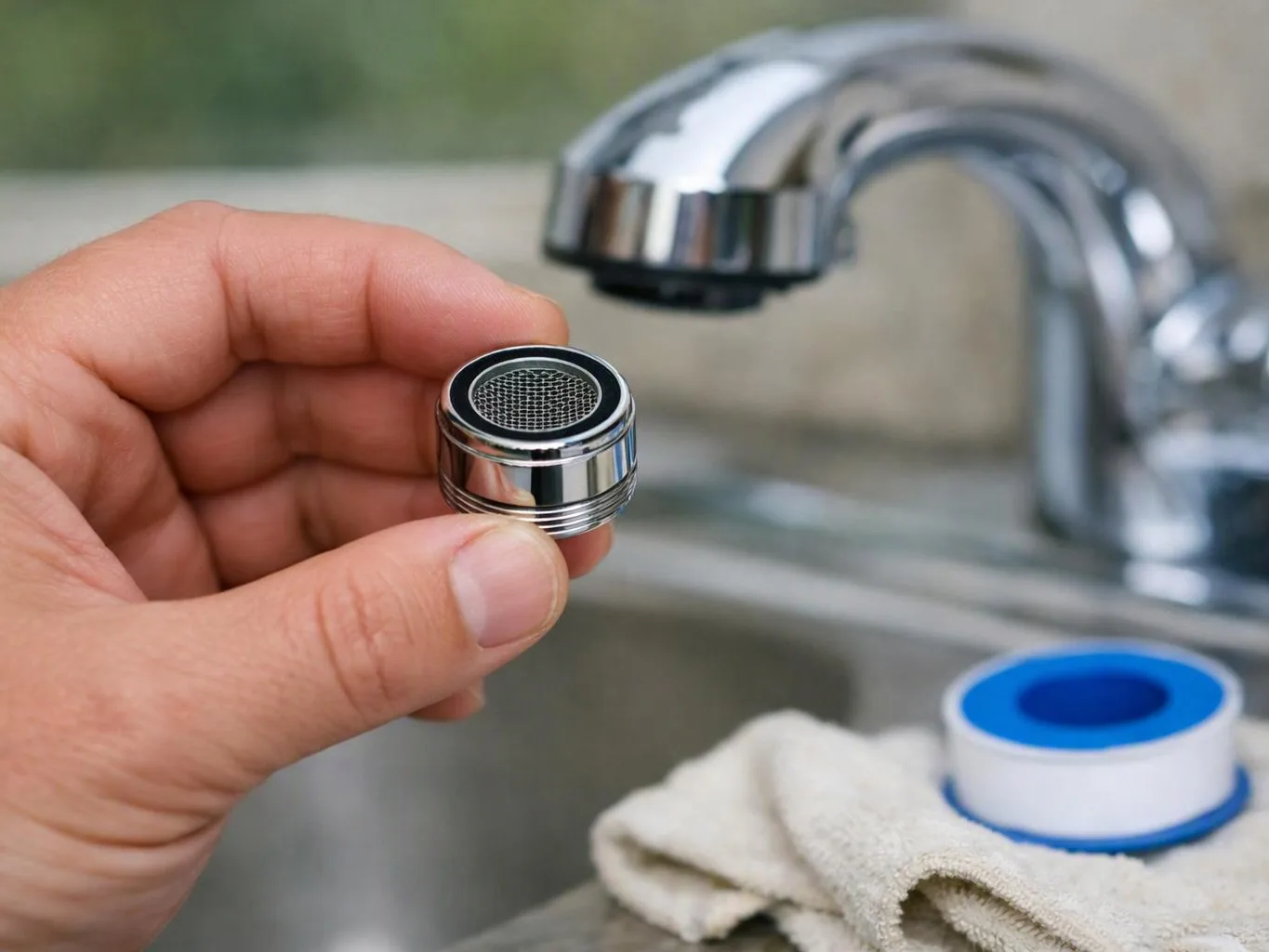
A faucet aerator can collect mineral debris and limit flow at the outlet. A worn cartridge can also restrict water inside the faucet body.
If the aerator and cartridge appear clear, the supply stop or branch pipe may be restricted. A clogged fixture is usually a smaller, more local problem than whole-house pressure loss.
Can Low Water Pressure Mean You Have a Leak?
Yes, low water pressure can mean a hidden leak when pressure drops suddenly or appears with damp areas, stains, or unexplained water use.
A water meter can show activity when fixtures are off, but meter movement alone doesn't identify the leak location. Wet drywall, a ceiling stain, or foundation moisture makes the concern more urgent.
Our team uses leak detection to trace concealed water loss and separate a leak from a supply restriction. We then explain whether the next step involves water line repair or another plumbing repair.
What You Can Check Safely Before Calling Us
Pressure patterns can help narrow the problem before our team arrives, but regulated plumbing components should remain closed to DIY work.
Use these safe observations to describe the issue clearly. Don't open a pressure regulator or alter hidden water lines.
DIY Checks vs Calling Us
Homeowner checks can show where the pressure problem appears, while our team performs the plumbing diagnosis.
Call us when the issue involves hidden piping, a pressure regulator, active water damage, or uncertain shutoff conditions. Our process keeps regulated work and water line repairs in trained hands.
| Factor | What you can do yourself | What we do |
|---|---|---|
| Fixture comparison | Compare faucets and showers in different areas. | Test affected fixtures and trace the supply path. |
| Visible water | Look for damp areas, stains, and exposed drips. | Perform leak detection when signs suggest concealed water loss. |
| Pressure regulator | Note pressure changes without adjusting the component. | Inspect the regulator and determine whether repair is suitable. |
| Water line condition | Record sounds, stains, and changes in water use. | Complete water line inspection and explain repair options. |
How We Diagnose Low Water Pressure
Pressure testing shows whether low flow affects one fixture, one branch, or the full plumbing system.
Our team compares pressure across fixtures and traces the affected supply path. We inspect accessible shutoff valves, the pressure regulator, and visible sections of the main water line.
When signs suggest a hidden leak, we use leak detection before recommending repairs. Our findings guide water pressure repair, water line repair, or a fixture-level solution.
Our quote reflects the actual problem, the access needed, and the repair method we recommend. Contact us through our contact page to request an exact quote.
When Water Pressure Problems Need Prompt Attention
Rapid pressure loss, visible water, or suspected pipe damage needs prompt attention because water damage can spread.
Turn off the emergency shutoff if water is actively escaping and the valve is safe to reach. Don't enter unsafe areas or open walls to chase a leak.
Our team checks the main water line, traces the source, and explains the repair needed. A burst pipe warning includes sudden flow changes, unusual rushing sounds, wet surfaces, or fast-growing stains.
Questions About Low Water Pressure
Can a clogged faucet aerator cause low water pressure?
Yes, a clogged faucet aerator can cause low flow at one faucet. Mineral debris can block the screen and restrict water at the outlet.
Why does water pressure drop when another fixture runs?
Water pressure can drop when another fixture runs because the supply line may have limited flow or an obstruction. A failing pressure regulator can also make shared water use more noticeable.
Can old pipes cause low water pressure?
Yes, old pipes can cause low water pressure when corrosion or mineral buildup narrows the passage. Our team checks the affected water line before recommending repair.
What does sudden low water pressure mean?
Sudden low water pressure can mean a valve problem, damaged pipe, failing regulator, or hidden leak. Damp areas, stains, and unusual sounds make a plumbing inspection more important.
How can I tell whether low water pressure is caused by a leak?
Low water pressure may be caused by a leak when the change is sudden and you notice unexplained meter activity, damp drywall, stains, or foundation moisture. Our team uses leak detection to locate concealed water loss.