Garbage Disposal Problems That Call for a Closer Look
Garbage disposal problems need repair when the unit hums without grinding, leaks under the sink, stays powerless, or drains slowly. PlumbingMaplevalley.info checks the disposal, connections, and drain path to identify the repair or replacement need.
Request an EstimateWhich Garbage Disposal Problems Need Repair?
Garbage disposal problems need repair when the unit hums without working, leaks, loses power, or drains slowly after basic checks.
A Humming Disposal That Won't Grind
A humming disposal that won't grind usually has jammed impellers or a motor under strain. The motor may receive power but fail to turn the grinding parts.
You can use the reset button as a basic external check. Do not reach into the grind chamber or force the impellers. We check the overload protector, motor condition, and jam source safely.
A Leak Under the Sink
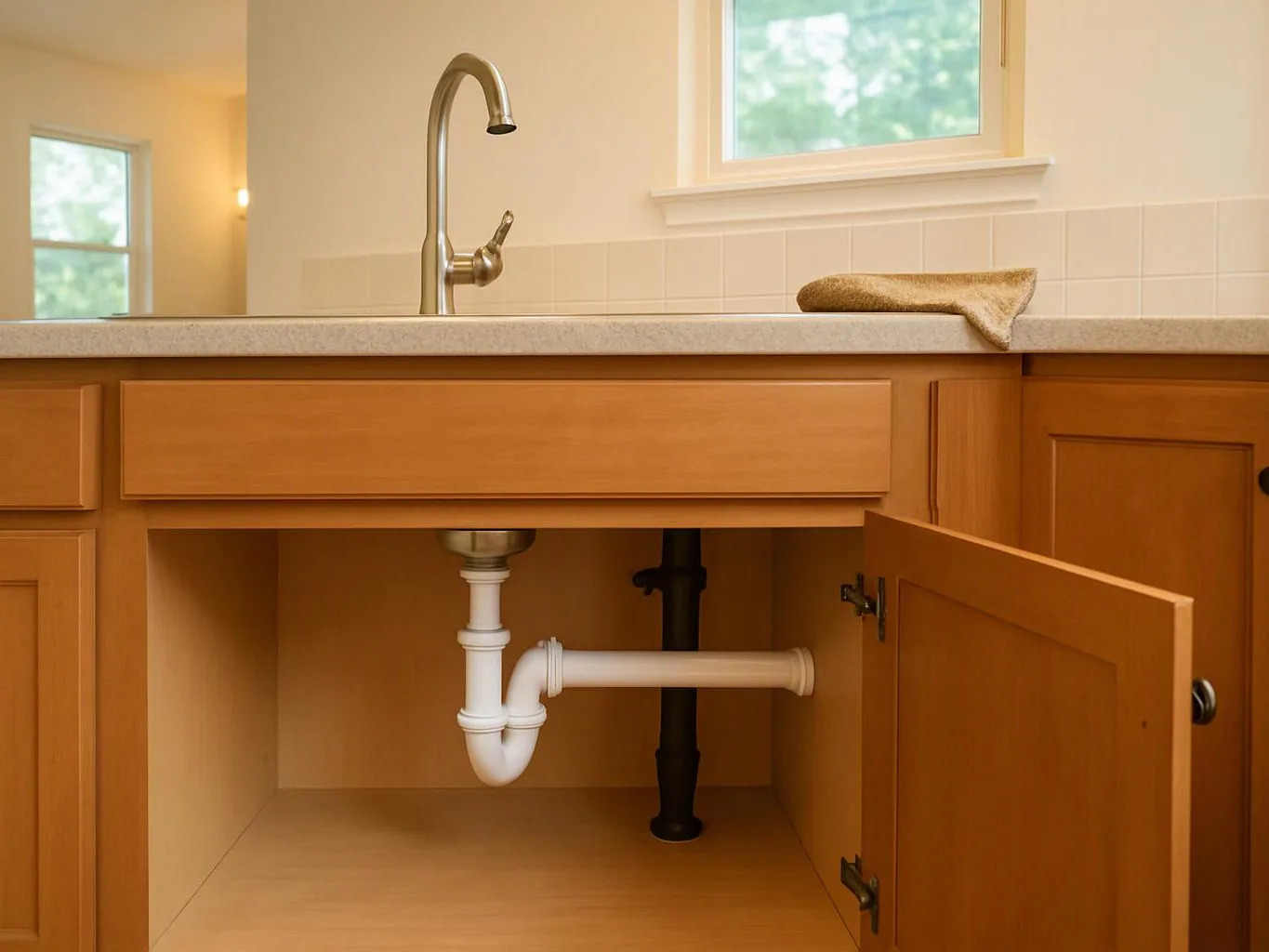
A leak under the sink can start at the garbage disposal housing, sink flange, drain elbow, or dishwasher inlet. A loose plumbing connection can also send water into the under-sink cabinet.
Water damage may spread before the leak becomes obvious. We trace the leak source and inspect the mounting seal, connected fittings, and disposal body.
A Disposal That Won't Turn On
A disposal that won't turn on may have a tripped circuit breaker, faulty wall switch, damaged power cord, or activated overload protector. A loose electrical connection can also cause an intermittent power failure.
Keep the wall switch off if the unit smells hot, shows damage, or makes a strange noise. We handle electrical faults and confirm that the electrical supply is safe before testing the disposal.
A Disposal That Drains Slowly
A disposal that drains slowly usually has food waste or a blockage in the drainpipe, sink trap, or drain connection. The disposal may work normally while the connected drain line remains restricted.
Repeated plunging can move a blockage without clearing its cause. We inspect the disposal outlet, drainpipe, sink trap, and connected line to locate the restriction.
What Can You Check Yourself, and When Should We Step In?
Homeowners can make safe external checks, but we should handle electrical faults, plumbing leaks, jams, and replacement work. Turn off the wall switch before looking under the sink, and stop if you see water near an electrical connection.
The table below separates simple observations from work that needs our team. It also helps with the replacement decision.
| Factor | What you can do yourself | What we do |
|---|---|---|
| External inspection | Look for visible leaks, cabinet water, or loose exterior fittings. | Trace the leak and inspect the housing, flange, and plumbing connections. |
| Power check | Check whether the wall switch or circuit breaker appears off. | Test the electrical supply, cord, switch, and overload protector safely. |
| Jammed unit | Turn the switch off and avoid placing hands or tools inside. | Check the motor and impellers with safe equipment and proper isolation. |
| Replacement decision | Note the symptoms, sounds, leaks, and visible damage. | Compare repair needs with unit condition and replacement compatibility. |
How We Diagnose a Garbage Disposal Problem
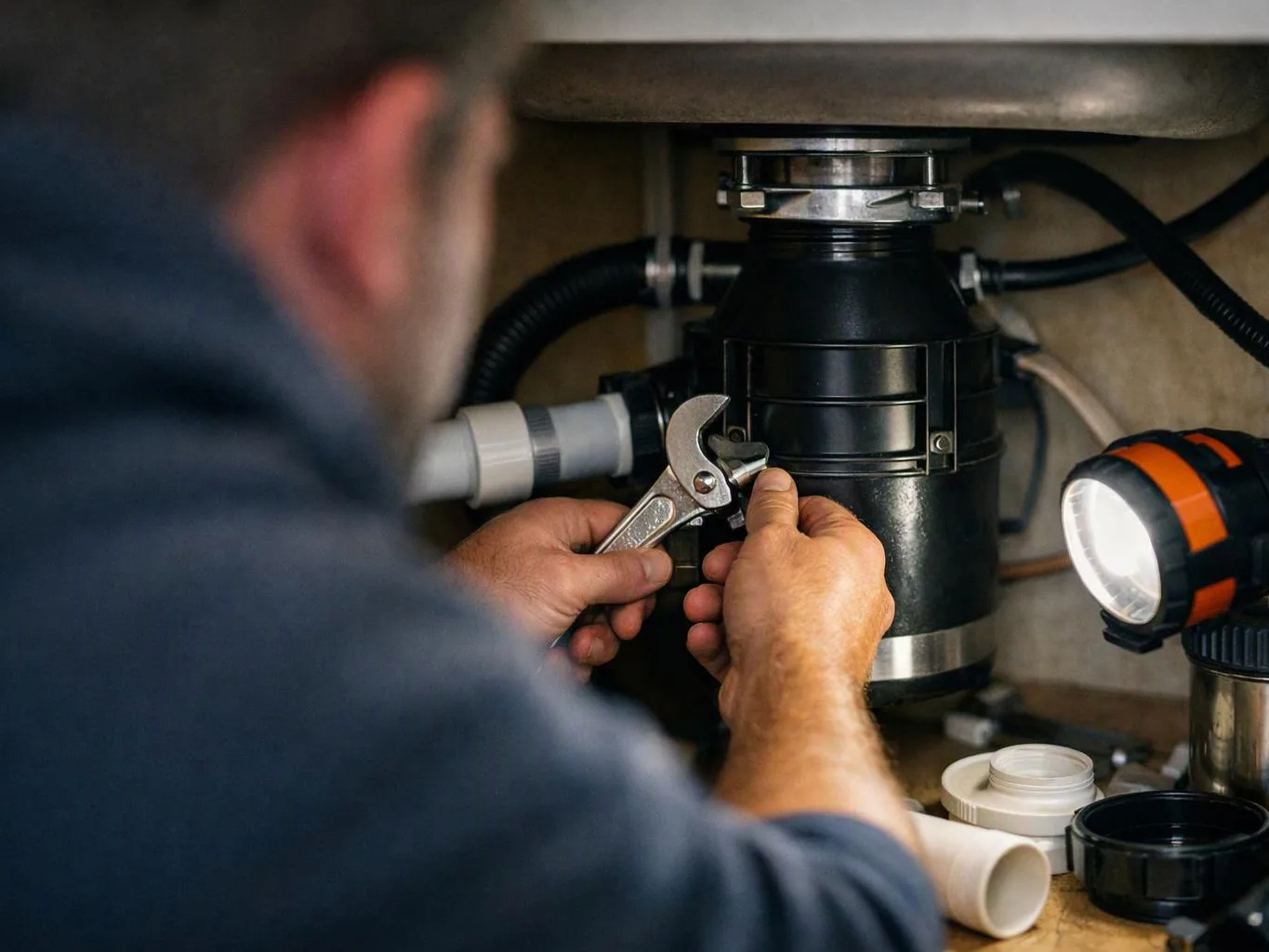
PlumbingMaplevalley.info diagnoses the disposal by checking its power, motor, mounting seal, drain path, and connected plumbing.
We begin with the electrical supply and the motor response. Next, we inspect the impellers, sink flange, drain line, and dishwasher connection. We look for a loose connection, corrosion, blockage, or housing damage that could explain the symptom.
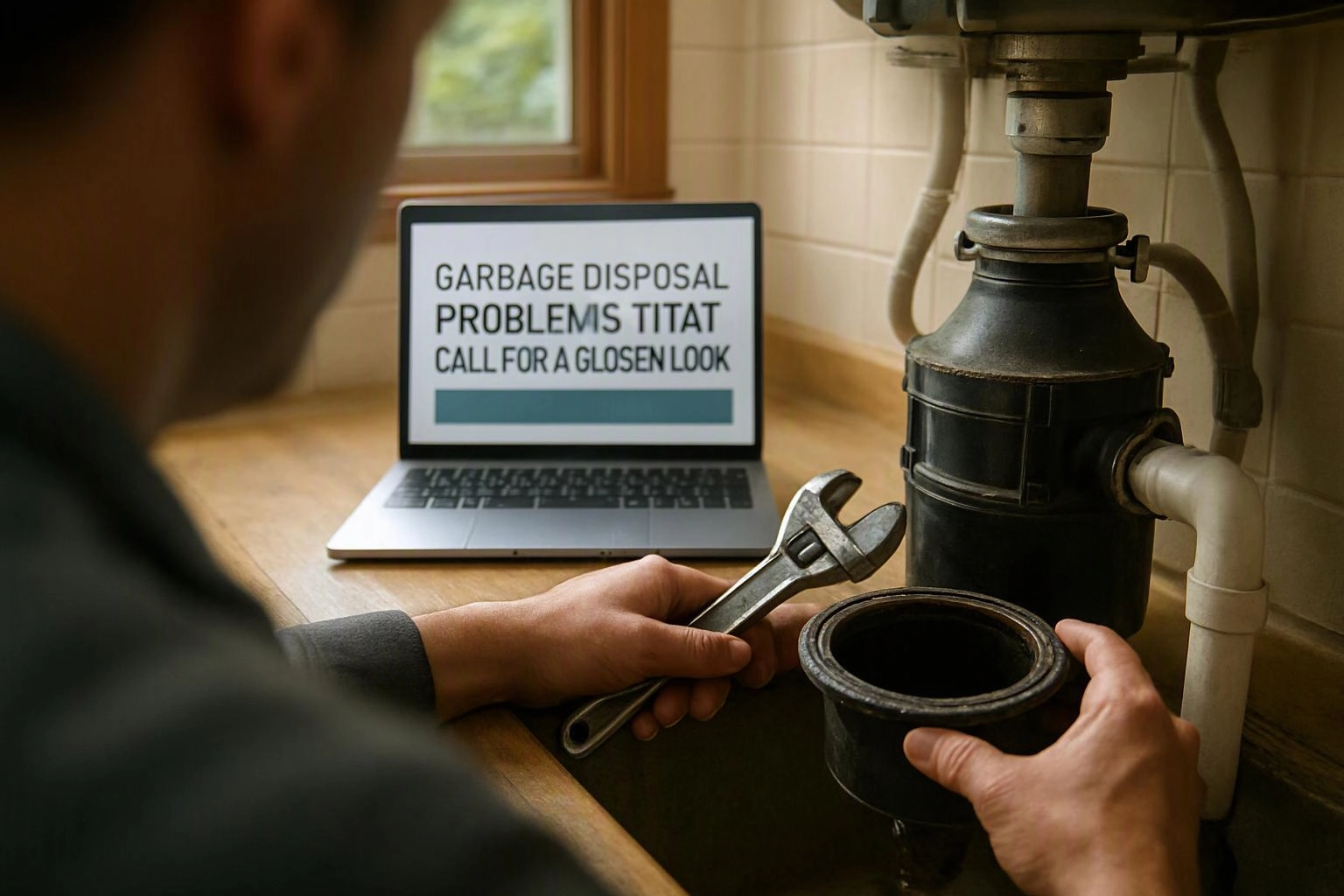
Our inspection also considers how the disposal connects to the sink and drain system. These checks help separate a disposal fault from a wider clogged drain problem.
When Does Repair Make More Sense Than Replacement?
Garbage disposal repair makes sense when the unit is structurally sound, while replacement fits major motor, housing, corrosion, or connection damage.
Repair may suit a disposal with a correctable jam, failed reset component, loose fitting, or worn seal. Replacement may be safer when motor failure affects the unit or the housing has deep corrosion.
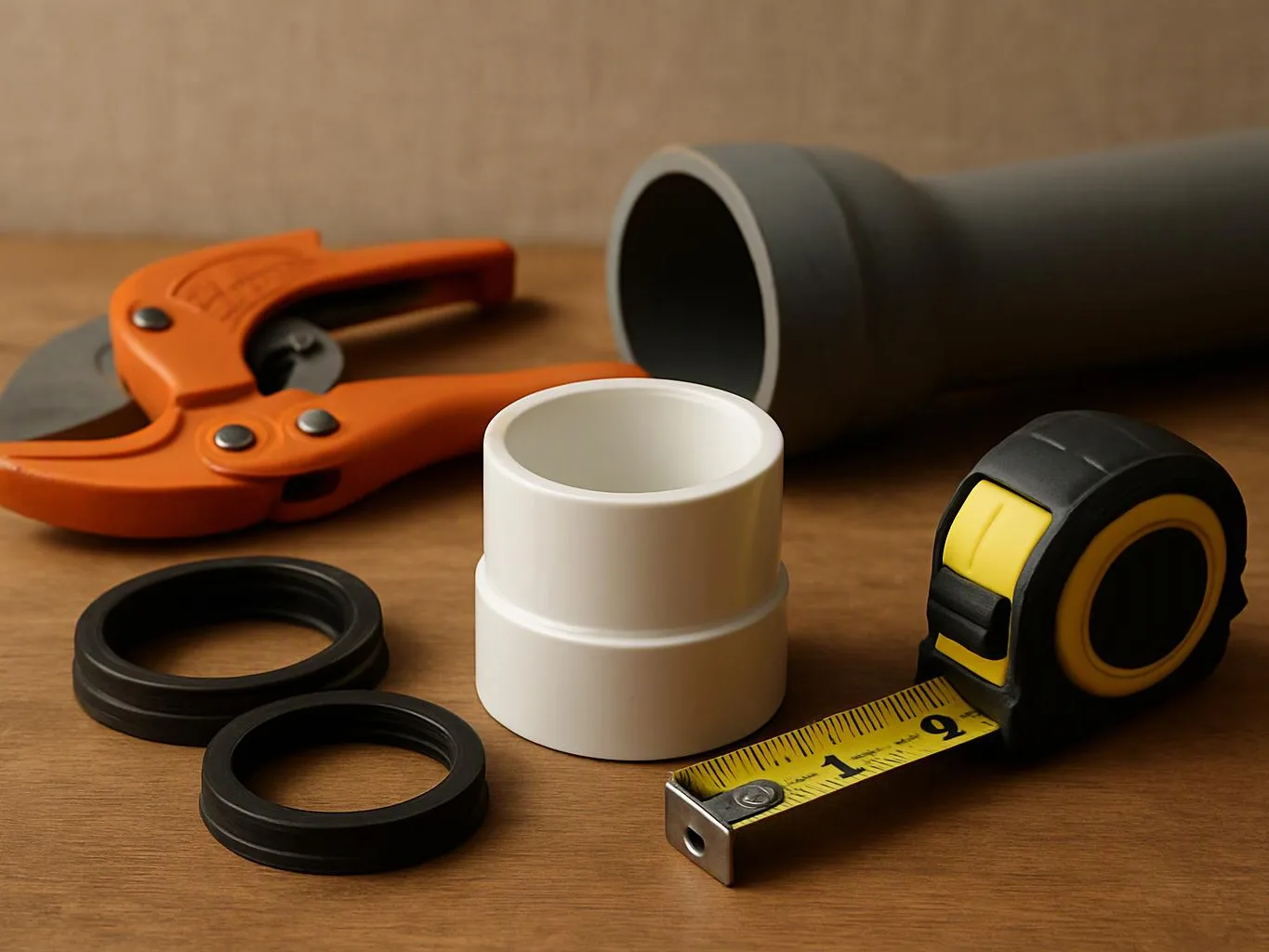
We also check replacement compatibility with the sink flange, drain line, dishwasher connection, and available electrical supply. A new unit must fit the existing plumbing and mounting arrangement.
What Does a Garbage Disposal Repair Quote Include?
A garbage disposal repair quote should identify the fault, required parts, labor, connection work, and whether installation is needed.
Our quote reflects the diagnostic findings and the condition of the motor, housing, mounting seal, and drain connections. If a replacement unit is needed, we explain the installation requirements and compatibility concerns.
To obtain an exact quote, contact our team with the disposal symptoms and any visible leak or power issue. We can then inspect the unit and explain the repair or replacement path.
What Should You Do Before We Inspect the Disposal?
Garbage disposal safety starts with keeping the unit off and protecting the area from water or electrical contact.
How Can We Help With a Garbage Disposal That Needs Repair?
We help with garbage disposal repair, garbage disposal installation, inspection, and replacement decisions.
Our team checks the symptom, identifies the failed part or connection, and explains the practical repair path. When replacement is needed, we confirm the unit fits the sink, dishwasher connection, drain line, and electrical setup.
For a closer inspection, contact us through our Garbage Disposal Repair service page.
Questions About Garbage Disposal Problems
Can a garbage disposal leak from the bottom?
Yes, a garbage disposal can leak from the bottom when the internal housing seal or body has failed. We inspect the housing and trace the water source before recommending repair or replacement.
Why does a garbage disposal smell bad after it stops working?
A garbage disposal can smell bad when trapped food waste remains in the grind chamber or drain connection. We check for residue, drainage restrictions, and damage that may keep the odor from clearing.
Is it safe to reach into a garbage disposal to remove a jam?
No, reaching into a garbage disposal to remove a jam isn't safe. Keep the switch off and let our team inspect jammed impellers without placing your hands inside the unit.
What should I do if the garbage disposal trips the circuit breaker?
If a garbage disposal trips the circuit breaker, leave the unit off and don't keep resetting the breaker. We check for a jammed motor, electrical fault, damaged cord, or wiring problem before restoring operation.